
Minority Leader Alexander Afenyo-Markin has warned that the government’s 24-hour economy initiative could struggle to achieve its objectives unless urgent steps are taken to reduce electricity costs and improve the reliability of power supply.
The Effutu Member of Parliament said affordable electricity was critical to enabling businesses to extend their operating hours, increase production and create jobs under the policy.
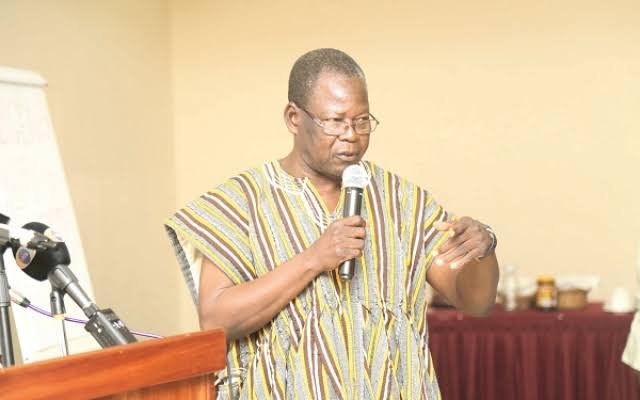
Speaking to journalists after cultural troupes from Winneba visited him at his residence, Mr Afenyo-Markin called for comprehensive reforms at the Electricity Company of Ghana (ECG) to address inefficiencies within the power distribution system.
He identified revenue leakages, illegal connections and widespread non-payment of electricity bills as some of the challenges undermining the financial health of the power sector.
According to him, government must address these problems instead of repeatedly increasing electricity tariffs to make up for losses within the system.
“Many people don’t pay for electricity they consume. There are a lot of illegal connections widespread. I think that it is one area where they have an opportunity to fix it,” he said.
Mr Afenyo-Markin argued that continued increases in electricity tariffs could raise the cost of doing business and discourage investment, ultimately undermining the objectives of the 24-hour economy.
He therefore urged the government to pursue reforms aimed at improving efficiency at ECG and reducing the cost of power for both households and businesses.
The Minority Leader also questioned whether the government had put adequate structures in place to support the implementation of the 24-hour economy, stressing that ambitious policy declarations must be backed by practical measures.
“Beyond the big English, what are the supporting pillars in place for successful implementation?” he asked.
He said businesses would need a reliable supply of affordable electricity, among other essential conditions, to operate effectively for longer hours.
Mr Afenyo-Markin further urged the government to build on reforms introduced by the previous administration rather than abandoning them, particularly those aimed at improving efficiency in the power sector.
He cautioned that without the necessary “guardrails” to ensure that policies translate into tangible benefits for citizens and businesses, the 24-hour economy could fail to deliver its intended results.
The Minority Leader maintained that fixing inefficiencies in the electricity sector should therefore be treated as one of the key foundations for successfully implementing the government’s 24-hour economy agenda.