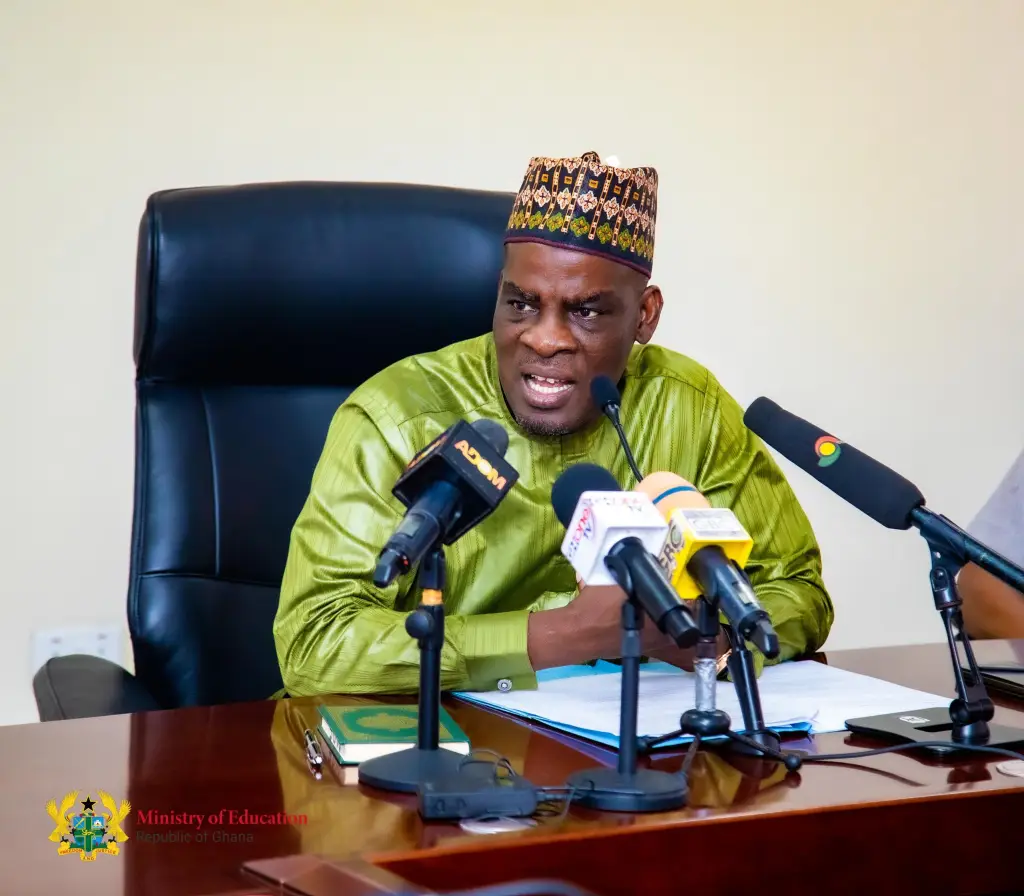
The clarification follows public concerns and reports suggesting that the revised curriculum would require all pupils to study foreign languages.
In a statement issued on August 2, the ministry, through its Press Secretary Hashmin Mohammed, said such claims are inaccurate and reaffirmed that Ghanaian languages remain the foundation of instruction in the early years of basic education.
According to the ministry, the proposed curriculum provides that children from kindergarten to Primary Three will be taught primarily in Ghanaian languages. It explained that the approach is intended to strengthen pupils’ literacy, numeracy, critical thinking and cognitive development by allowing them to learn in a language they understand best.
The ministry further stated that from Primary Four to Primary Six, teaching will be conducted in both English and Ghanaian languages. It said the bilingual system is aimed at helping learners transition effectively to higher levels of education while preserving their ability to communicate in their indigenous languages.
It stressed that French, Arabic, Chinese and other foreign languages will only be offered as optional subjects, not mandatory ones.
According to the ministry, pupils who wish to study any of these languages will be able to do so only in schools where qualified teachers and the necessary teaching resources are available.
The ministry urged the public to disregard misinformation surrounding the proposed curriculum, insisting that the revised language policy is designed to improve learning outcomes while promoting Ghana’s local languages and cultural identity.
Below is the full statement.
FOR IMMEDIATE RELEASE
MINISTRY OF EDUCATION CLARIFIES LANGUAGE OF INSTRUCTION POLICY FOR BASIC SCHOOLS
1.The Ministry of Education wishes to clarify the Government’s language of instruction policy for basic schools following public discussions and misconceptions regarding the use of Ghanaian and foreign languages in the country’s education system.
2.In the proposed revised curriculum, Ghanaian languages will serve as the primary medium of instruction from Kindergarten (KG) to Primary Three. This policy is intended to strengthen children’s foundational literacy, numeracy, critical thinking, and overall cognitive development by enabling them to learn in a language they understand best during their formative years.
3.From Primary Four to Primary Six, both Ghanaian languages and English will be used as the medium of instruction. This bilingual approach is designed to support a smooth transition to higher levels of education, where English assumes a greater role, while preserving learners’ competence in Ghanaian languages.
4.The Ministry further clarifies that foreign languages such as French, Arabic, and Chinese among others are not compulsory subjects. They will be offered as optional languages for pupils who wish to acquire additional language skills, subject to the availability of qualified teachers and learning resources in their respective schools.
5.The language policy is informed by internationally accepted educational practices, which recognise that children learn best when they begin their education in a familiar language before gradually transitioning to additional languages. It also aligns with Ghana’s commitment to improving literacy outcomes, promoting multilingualism, and preserving the nation’s rich linguistic and cultural heritage.
6.The Ministry urges parents, teachers, school authorities, media organisations, and the general public to disregard misinformation suggesting that foreign languages have been made compulsory in the proposed revised curriculum.
7.The Ministry remains committed to implementing evidence-based education policies that improve learning outcomes and equip every Ghanaian child with the knowledge, skills, and competencies needed to thrive in an increasingly interconnected world.