The Majority in Parliament has attributed Ghana’s current challenges in combating narcotics trafficking to years of inadequate funding, staffing and institutional support for the Narcotics Control Commission (NACOC).
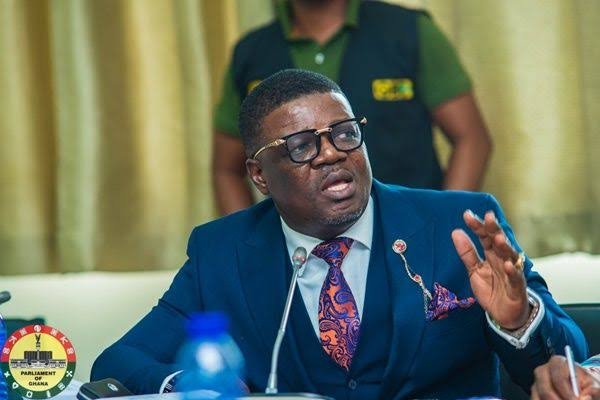
Majority Leader and Chairman of Parliament’s Defence and Interior Committee, James Agalga, said the agency had not been sufficiently resourced to respond effectively to increasingly sophisticated drug trafficking networks.
Speaking to journalists in Parliament on Thursday, September 24, the Builsa North MP said the condition of NACOC before 2025 was important to understanding the reforms being pursued by the current administration.
“The public must be informed of the extent of institutional neglect that preceded 2025 to fully value the transformation that is now taking place and hold this government to the standard it has set itself. The state of the situation prior to 2025 — an institution left to fail,” he said.
Mr Agalga argued that NACOC had operated for years without the resources and personnel required to effectively execute its mandate.
“This was not a commandment which was not carried out. This was a need that was not met and resources were not available to do so,” he said.
He also pointed to changes introduced at the ports in 2018, particularly the decision to exclude NACOC personnel from mandatory joint physical inspections of containers at the Tema Port.
According to him, the change created a gap in the country’s port security system, with consequences that Ghana is still dealing with.
“This country made a decision in 2018 whose impact we are still facing. NACOB was no longer to be subject to mandatory joint inspection at the Tema Port,” he said.
Former Defence Minister Dominic Nitiwul, however, has disputed the description of the reform as NACOC being removed from Ghana’s ports.
Mr Nitiwul said NACOC officers remained at the port but were no longer involved in routine physical container inspections. He explained that the 2018 reforms were intended to reduce delays and bureaucracy caused by multiple agencies physically inspecting the same containers.
The differing accounts have renewed debate over whether the 2018 reforms affected Ghana’s ability to detect narcotics concealed in containers moving through its ports.
Former government official Kofi Brako-Powers has also cautioned against establishing a direct causal link between the 2018 changes and the recent increase in major drug seizures, arguing that there is currently no data to establish such a connection.
The debate comes amid heightened scrutiny of Ghana’s narcotics-control systems following several major seizures involving Ghana-linked consignments.
In the latest high-profile case, French authorities intercepted nearly 3.9 tonnes of cocaine at the Port of Dunkirk on September 10, 2026, from a container that had departed Ghana.
The development has triggered investigations in Ghana and intensified calls for stronger coordination among agencies responsible for port security, intelligence, investigations and narcotics enforcement. The Majority has also stressed that no single institution can effectively tackle the entire drug trafficking chain without greater inter-agency cooperation.
The government has announced measures to strengthen NACOC’s role in joint container inspections at Ghana’s ports as part of efforts to improve narcotics detection and coordination among relevant agencies.
The issue is also expected to feature in Parliament’s scheduled sitting on September 29, after 48 MPs petitioned the Speaker to recall the House from recess over concerns surrounding major narcotics seizures linked to Ghana. Speaker Alban Bagbin has since summoned Parliament to sit at noon on September 29, although the notice does not specify the business for the sitting.
The competing positions over NACOC’s resourcing and the 2018 port reforms are therefore likely to form part of the wider parliamentary discussion on Ghana’s narcotics-control system and the measures required to strengthen the country’s ability to prevent drug trafficking through its ports.