Asantehene Otumfuo Osei Tutu II has called on the Ghana Revenue Authority (GRA) to widen its tax collection efforts by bringing more businesses and economic activities within the national tax net.
He said greater attention must be given to sectors that have traditionally remained outside the formal tax system, particularly businesses operating in the informal economy.
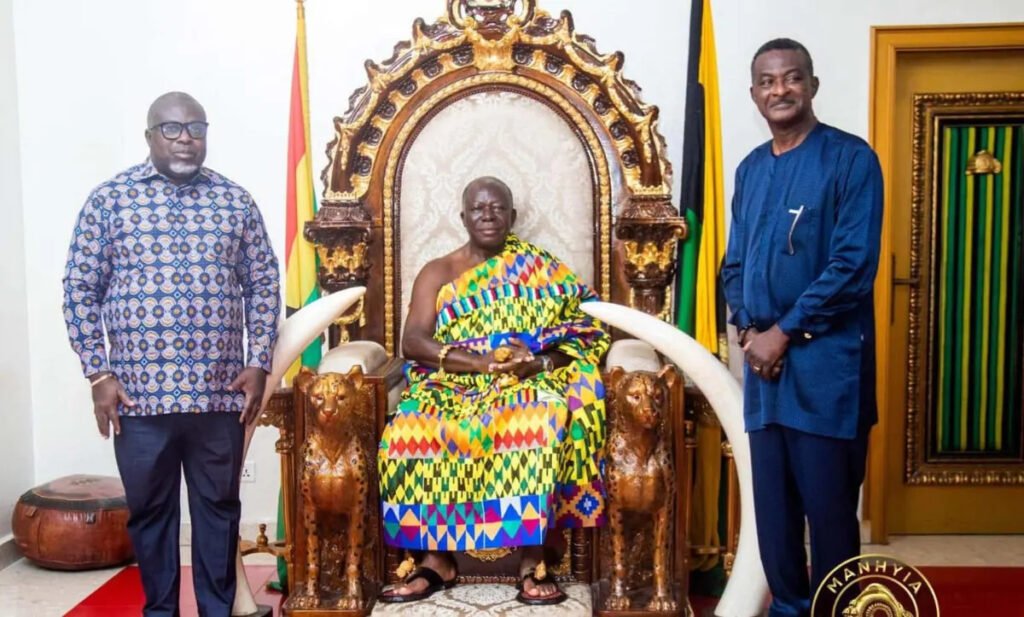
Otumfuo made the call on Friday, August 7, 2026, when the Board of Directors, Commissioners and senior officials of the GRA paid a courtesy visit to him at the Manhyia Palace in Kumasi.
The visit provided an opportunity for the GRA leadership to formally introduce its Board to the Asantehene, seek his blessings and announce the departure of the Ashanti Regional Director of the Authority, Madam Agnes Adu Gyamfi Adjei.
The Asantehene stressed that expanding the tax base was necessary to ensure fairness in revenue mobilisation and reduce the pressure on individuals and businesses already complying with their tax obligations.
He urged the GRA to develop practical strategies to identify and register businesses and individuals in the informal sector who may not be paying taxes.
“Many people do not pay tax. Devise avenues to get them and tax them. Some people do not even know they have to pay taxes. Sensitise the public about the need to pay taxes so they accept it,” he said.
Otumfuo specifically mentioned artisans, mechanics, barbers and other informal operators, suggesting that the GRA could work through their respective associations to improve tax collection.
He proposed that associations could be assigned periodic revenue targets to help mobilise taxes from their members.
The Asantehene also stressed that efforts to increase domestic revenue would only succeed if tax officials conducted themselves with integrity and transparency.
He cautioned that corruption and abuse of office by revenue collectors could undermine the GRA’s efforts, erode public confidence and deprive the state of funds needed for development.
“If your officers decide to cancel tax debt for their personal gain, that goes against the state. If we don’t want to go for loans, then we need to mobilise revenue locally, and that will spur development,” he said.
According to Otumfuo, maintaining high ethical standards would not only benefit the country but also enhance the reputation of GRA officials who contribute to significant improvements in revenue mobilisation.
He said officials could eventually be recognised as the people who helped the Authority achieve historic levels of domestic revenue collection during their tenure.
The Asantehene commended the GRA leadership, headed by Commissioner-General Anthony Sarpong, for what he described as notable progress in revenue mobilisation.
However, he cautioned that substantial amounts of revenue could still be lost through administrative weaknesses, under-declaration and other inefficiencies within the collection system.
He therefore urged management to intensify efforts to identify and close loopholes that allow revenue to escape the tax system.
Otumfuo noted that effective domestic revenue mobilisation was fundamental to national development, particularly as the government seeks to finance its programmes and fulfil its socio-economic commitments without excessive dependence on borrowing.
GRA outlines revenue mobilisation reforms
The GRA Commissioner-General, Anthony Sarpong, used the meeting to brief the Asantehene on reforms being implemented to improve revenue collection.
He said the Authority had introduced technological reforms at the Customs Division as part of efforts to modernise operations and increase efficiency.
“We implemented some reforms. We started at Customs. We have introduced modern technology there. It started in April. It is going well,” he said.
Mr Sarpong said the reforms had already contributed to significant improvements in revenue mobilisation.
He disclosed that while the Authority previously mobilised about GH¢4 billion within a comparable period, revenue collected over the past three months had risen to GH¢5.5 billion, while collections in the sixth month reached GH¢6 billion.
He said the figures demonstrated progress towards fulfilling the GRA’s mandate of maximising domestic revenue for the country.
The delegation that visited the Manhyia Palace included GRA Board Chairman George Kweku Ricketts-Hagan, Commissioner-General Anthony Sarpong, Patrick Nomo, Faustina Nelson, George Aryeetey, Laadi Agyamba and Francis-Xavier Sosu, all members of the GRA Board.