President John Dramani Mahama has announced plans to phase out the export of unprocessed mineral ores by 2030 as part of efforts to expand local processing, promote industrialisation and retain more economic value from Ghana’s natural resources.
The policy will target minerals including bauxite, manganese, iron and lithium, with the government planning a phased prohibition supported by legal measures, mineral-specific requirements and clear implementation timelines.
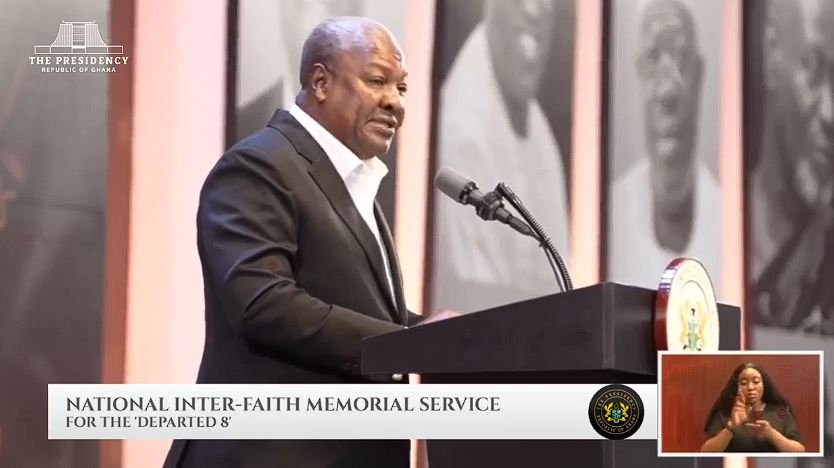
Speaking at the Mining in Motion Conference on Monday, October 19, 2026, President Mahama said Ghana must move away from exporting minerals in their raw state and focus on processing them locally to support industrial growth and economic development.
“I’ve set a clear goal that by 2030, raw mineral ores should no longer leave our shores. Our bauxite, manganese, iron, lithium, and other minerals must support processing and industrial development here at home,” he said.
The President explained that the proposed restrictions would be implemented gradually, with regulations tailored to the different minerals and transparent timelines to guide businesses and investors.
He added that companies seeking access to Ghana’s mineral resources would be required to meet clearly defined processing obligations as part of the government’s strategy to increase domestic value addition.
“We will pursue a phased prohibition on exports of unprocessed ores, supported by the necessary legal measures, mineral-specific requirements, and transparent implementation timetables,” he stated.
President Mahama also disclosed that the government had already imposed a ban on the export of iron scrap and non-ferrous metals, describing the measure as part of broader efforts to ensure that more economic benefits from Ghana’s resources remain within the country.
“We have already imposed a ban on the export of iron scrap and non-ferrous metals. Investors must understand the processing obligations associated with access to our resources,” he added.
The proposed policy is intended to encourage investment in domestic processing facilities, create employment opportunities and strengthen local industries linked to the mining sector.
By requiring more minerals to be processed before export, the government aims to increase the value generated locally, support industrial development and reduce the country’s dependence on exporting raw commodities.
The initiative forms part of broader efforts to use Ghana’s mineral wealth to drive economic transformation and ensure that the country derives greater benefits from its natural resources.
The proposed measures are intended to strengthen local processing capacity, support industrial growth and ensure that Ghana retains a greater share of the economic benefits generated from its mineral wealth.