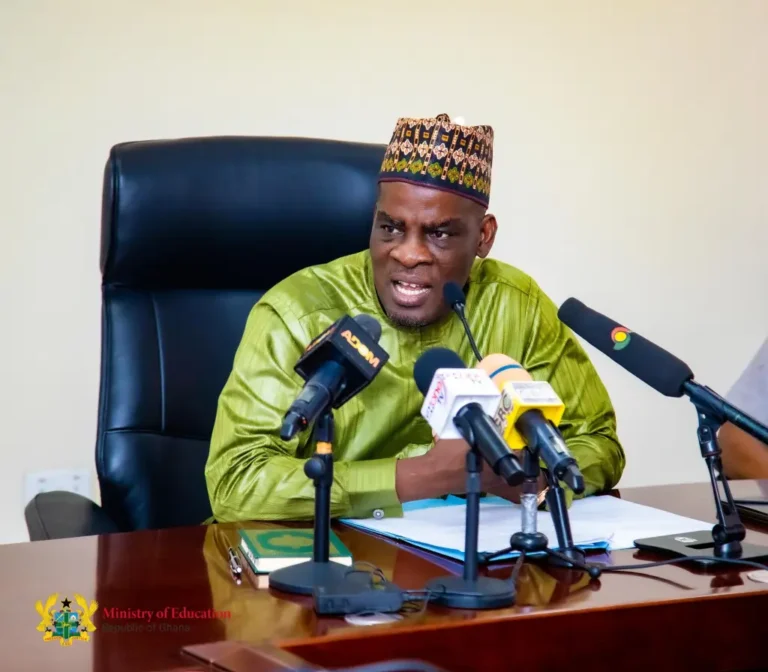
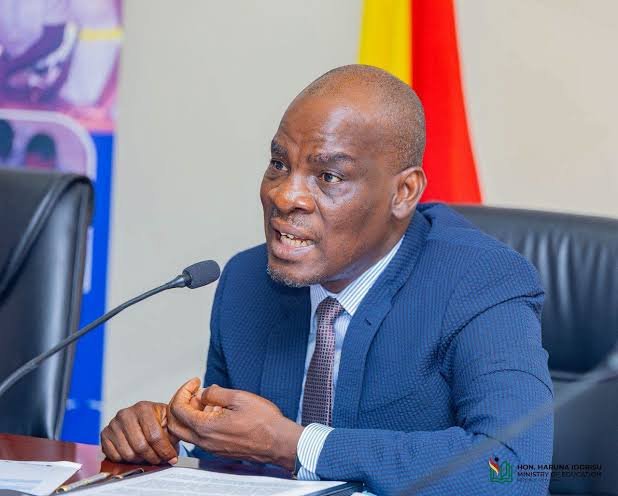
Education Minister Haruna Iddrisu has blamed what he describes as excessive borrowing under former President Nana Akufo-Addo’s administration for Ghana’s economic crisis, arguing that the country’s debt situation left the economy in distress.
Mr Iddrisu criticised the previous New Patriotic Party (NPP) government’s management of public debt, insisting that its borrowing practices contributed significantly to the economic challenges inherited by the current administration.
Speaking on Joy FM, he suggested that the NPP’s limited criticism of the current state of the economy indicated an improvement under President John Dramani Mahama’s government.
“The revelation of their excessive appetite for borrowing is what cracked the Ghanaian economy. We became debt-unsustainable, and a country in distress,” he said.
Mr Iddrisu also defended the Mahama administration’s economic management, pointing to improved currency stability as a positive development that has helped businesses plan their operations and manage costs.
“We are doing our utmost best as a government to walk out of that economic crisis. Now we have achieved stability,” he noted.
His comments come as the government continues to highlight improvements in key economic indicators, including growth prospects and inflation.
The International Monetary Fund (IMF), in its latest World Economic Outlook, has raised Ghana’s economic growth forecast for 2026 to 5.7%, up from 4.6% projected in April.
The revised forecast represents an upward adjustment of 1.1 percentage points, signalling improved expectations for the country’s economic performance.
The Fund has also projected Ghana’s year-end inflation rate at 4.8%, despite continuing global economic pressures and uncertainty.
The projections were contained in the IMF’s latest economic outlook report, released on the sidelines of the IMF and World Bank Annual Meetings in Bangkok, Thailand.
The revised forecasts provide a positive outlook for Ghana’s economy, although sustaining the recovery will depend on continued stability, effective debt management and broader economic conditions.