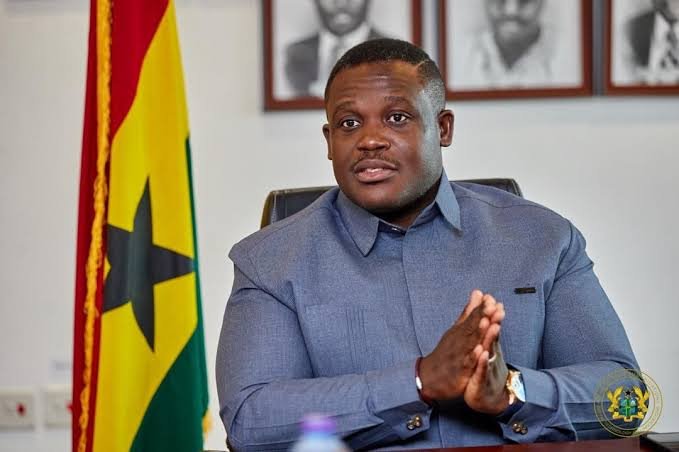
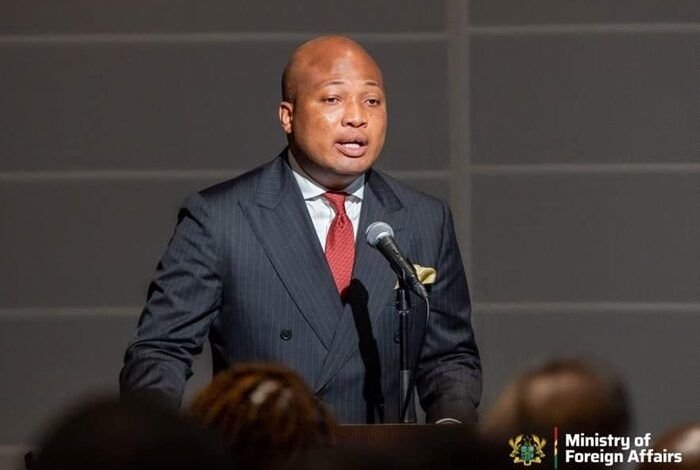
Ghana plans to apply for Partner Country status in the BRICS bloc rather than seek full membership, Foreign Affairs Minister Samuel Okudzeto Ablakwa has announced.
The move forms part of the government’s efforts to diversify Ghana’s international partnerships and explore economic, diplomatic and strategic opportunities in line with the country’s national interests.
Speaking to TV3 on Saturday, October 10, 2026, Mr Ablakwa said Ghana maintained strong relations with countries in the bloc and considered them important partners in advancing its development agenda.
“Ghana already enjoys excellent relations with BRICS member countries. We are therefore seeking to join our natural allies in a bloc that has become a major force in global trade,” he said.
The minister explained that the decision was guided by the need to prioritise Ghana’s national interest, consistent with Article 40 of the 1992 Constitution, which outlines the principles governing the country’s international relations.
He noted that BRICS offers a platform for consultation and cooperation on global and regional issues, including political and economic governance.
“BRICS offers Ghana an opportunity to engage with major emerging economies on issues that affect our development and the wider global economy,” he stated.
Mr Ablakwa also sought to dispel concerns that Ghana’s proposed association with BRICS could undermine its relations with traditional partners, particularly countries whose political and economic interests may differ from those of some bloc members.
He said the decision was consistent with Ghana’s long-standing non-alignment policy, which allows the country to maintain diplomatic and economic relations with different nations without being tied exclusively to competing global powers.
To illustrate this approach, the minister cited the foreign policy of Ghana’s first President, Dr Kwame Nkrumah, whose government worked with different international partners to advance national development.
He pointed to US support for the construction of the Akosombo Dam and Ghana’s cooperation with the then Soviet Union on its early nuclear energy programme as examples of the country’s engagement with competing global powers.
Mr Ablakwa further disclosed that the government had engaged European Union member states before announcing its intention to pursue BRICS Partner Country status.
According to him, Ghana had made it clear to its European partners that the initiative was intended to broaden the country’s development opportunities rather than weaken existing diplomatic and economic relationships.
“We have made it clear that Ghana’s decision to diversify its strategic options does not mean we intend to disengage from our existing partners,” he said.
BRICS originated as BRIC, comprising Brazil, Russia, India and China, and held its first summit in Russia in 2009. South Africa joined in 2011, followed by Egypt, Ethiopia, Iran, Saudi Arabia and the United Arab Emirates in 2024. Indonesia joined the grouping in 2025.
The bloc has also established a Partner Country category, with countries including Belarus, Bolivia, Cuba, Malaysia, Nigeria, Thailand, Uganda, Uzbekistan and Vietnam identified among its partners in 2025.
If Ghana’s application is successful, the country would gain another platform to pursue trade, investment and diplomatic cooperation with emerging economies while maintaining its existing international partnerships.