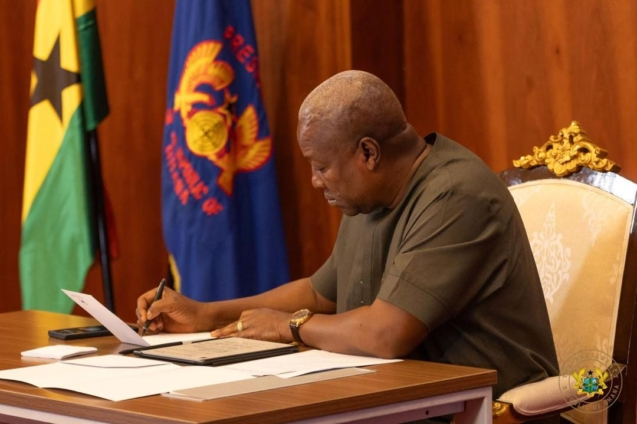
President John Dramani Mahama has signed 10 Bills into law, paving the way for the implementation of a range of reforms covering taxation, revenue mobilisation, justice, national defence, maritime regulation and the cocoa industry.
The Bills were among 12 pieces of legislation passed by Parliament during the Second Meeting of the Second Session of the Ninth Parliament, which ended on July 31, 2026.
The President’s assent formally gives legal effect to the legislation and allows the relevant government institutions and agencies to begin implementing their provisions.
The newly enacted laws include the Customs Act, 2026; Community Service Act, 2026; Tribunals Act, 2026; Maritime and Related Offences Act, 2026; and National Defence University, Ghana Act, 2026.
Also signed into law are the Income Tax (Amendment) Act, 2026; Energy Sector Levies (Amendment) Act, 2026; Ghana Cocoa Board Act, 2026; Value Added Tax (Amendment) Act, 2026; and Excise Act, 2026.
A significant portion of the new legislation is focused on strengthening Ghana’s revenue mobilisation and reshaping aspects of the country’s tax system.
The Income Tax (Amendment) Act, Value Added Tax (Amendment) Act, Excise Act and Energy Sector Levies (Amendment) Act are expected to influence the collection and administration of government revenue.
The Customs Act, meanwhile, provides a new legislative framework for customs-related matters, with potential implications for trade and revenue collection.
The new laws also introduce changes beyond taxation and public finance.
The Community Service Act and Tribunals Act are expected to affect aspects of justice administration, while the Maritime and Related Offences Act provides a legal framework for addressing offences within the maritime sector.
The National Defence University, Ghana Act gives legislative backing to the establishment and operations of the institution, with implications for education and national defence.
The Ghana Cocoa Board Act also provides a new legal framework for the regulation and administration of the cocoa sector, one of Ghana’s major economic activities.
Overall, the 10 laws represent a broad legislative package covering key areas of the economy, governance, justice and national security, with their implementation now expected to begin following the President’s assent.